
Community Science Programs
Help us conserve birds as a community scientist. Read below to learn about our programs and how to volunteer!
Bald Eagle Watch
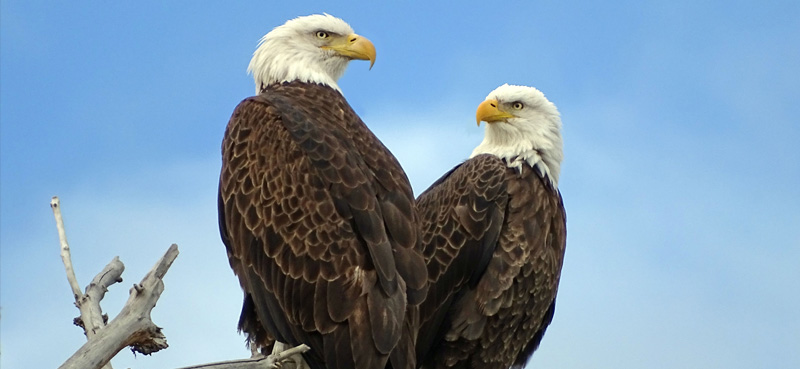
Photo by Anne Whitehurst
Bird Conservancy of the Rockies’ Bald Eagle Watch program was started in 1988 to monitor and help protect the Bald Eagle nest at Barr Lake State Park, northeast of Denver. Now, community scientists with the Bird Conservancy monitor eagle nests across the Front Range to provide information to biologists on the nesting success of the Colorado population.
Bald Eagle Watch’s growing dataset is the largest and most comprehensive in the state, representing 81% of the Colorado’s known breeding population. In 2020, Colorado Parks & Wildlife launched a four-year study to help understand current population trends, habitat use and impacts of human disturbance on Bald Eagles along Colorado’s densely populated Front Range. We are thrilled to see BEW data collected by our volunteers contributing to this effort.
Click here to download the Bald Eagle Watch 2020 Report to the American Eagle Foundation.
Project Summary:
What: Monitor and collect data on Bald Eagle nesting behavior and productivity. Report any disturbances that may impact nesting eagles. Data help wildlife managers and conservation groups ensure continued healthy populations of Bald Eagles.
When: Focus is on the breeding season, which is February to July. Many volunteers continue to monitor their nests year-round.
Where: Throughout Colorado. This year, we are particularly interested in recruiting volunteers who would like to monitor birds in or near the following counties – Garfield, Routt, Eagle, Mesa, Summit, Grand, Gilpin and Park
Who: Anyone who can monitor designated nest(s) weekly for a minimum of one hour, fill out a data sheet and enter into an online reporting system; can drive to nest site; enjoys monitoring either alone or with another person; and has a spotting scope or binoculars
Training: Training, via ZOOM, will be held on Saturday, January 20, 2024, from 10 a.m. – 12 noon and 1 – 3:30 p.m. Attendance is mandatory, but anyone interested who is unable to participate that day may view a recording of the training at a later time.
To sign up to participate or for more information: E-mail Meredith McBurney with your name, e-mail, phone number, and county.
Bald Eagle Watch is made possible with generous support from
Eastern Screech Owl Monitoring on the Poudre River
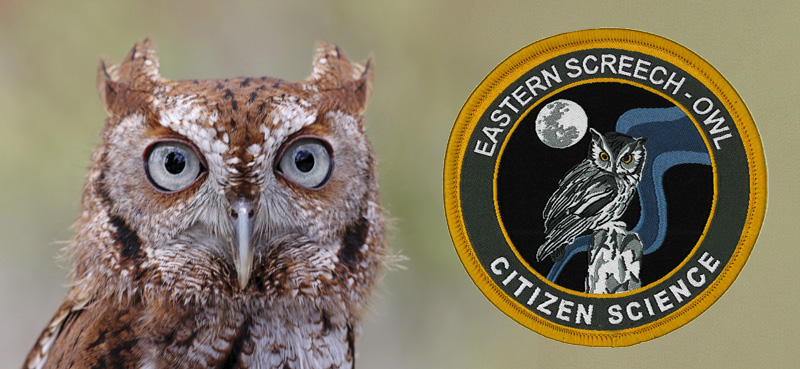
Bird Conservancy of the Rockies’ is using the power of community science to study Eastern Screech-Owls along the Cache la Poudre River in Fort Collins. Data gathered through the project is used to inform possible habitat enhancement and restoration sites along the river. The Eastern Screech-Owl is one of the most common owl species in North America, yet little is known about its ecology, with no population trends for Colorado. Eastern Screech-Owls are an indicator species of riparian forest health for the City of Fort Collins.
What: Monitor and collect data on Eastern Screech-Owls and other owl species living along the Cache la Poudre River. Data help guide habitat restoration efforts along the river.
When: March to mid-May
Where: Survey sites along Poudre River in Fort Collins, Colorado
Who: Anyone with an interest in owls. Requires the ability to conduct surveys at night, follow a standardized protocol, and drive to monitoring sites and walk to river.
Training: late February at the Bird Conservancy’s office in Fort Collins, Colorado
Contact: email Rob Sparks, Senior Spatial Ecologist – Spatial Analysis Coordinator or by phone: (970) 482-1707 x 19
This project is made possible with generous support from: